Tires are one of the biggest maintenance costs for any truck, and one of the most common reasons trucks end up on the side of the road. A semi can have 18 tires or more, and each one carries a lot of weight through Texas heat, rough roads and long miles.
When something goes wrong, drivers and fleet managers face a quick decision: can this tire be repaired, does it need to be replaced, or is it safe to keep rolling to the next stop?
Here’s a practical guide to making that call, plus the federal tread depth rules every driver should know.
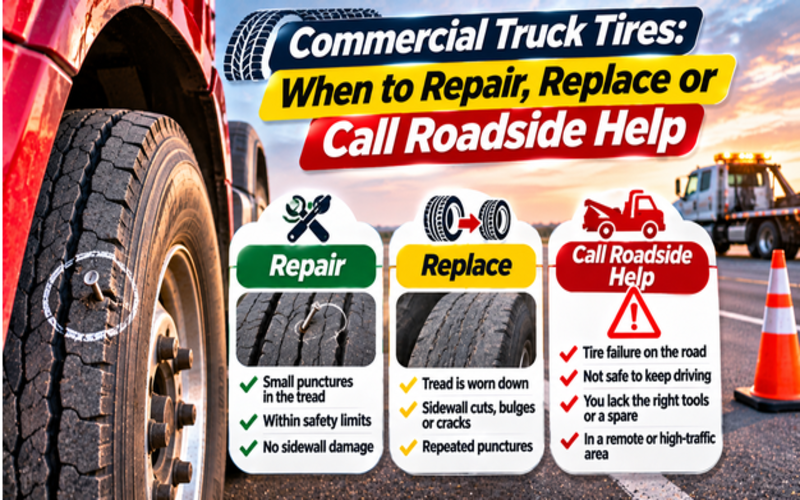
A commercial truck tire can often be repaired if a puncture is small and in the tread area. It needs replacing if it has sidewall damage, a bulge, exposed cords, a large or poorly placed puncture, or tread below the legal minimum. Federal rules require at least 4/32 inch of tread on steer tires and 2/32 inch on other tires. If a tire is flat, damaged or losing air on the road, stop and call for roadside tire service.
Know the Legal Tread Depth
Under FMCSA rules, commercial truck tires must meet these minimums:
| Tire position | Minimum tread depth |
|---|---|
| Steer tires | 4/32 inch in every major groove |
| Drive and trailer tires | 2/32 inch in every major groove |
Tires below these limits can lead to violations and out-of-service orders during inspections. Many fleets replace tires well before they reach the legal minimum, especially steer tires.
When a Tire Can Usually Be Repaired
A tire may be repairable when:
- The puncture is in the tread area, not the shoulder or sidewall
- The hole is small, such as from a nail or screw
- The tire wasn’t driven on flat for long
- There’s no other damage inside the tire
A proper repair is done from the inside of the tire with a patch and plug. A plug alone from the outside is a temporary fix at best. Repair limits depend on the tire maker’s guidelines, so a technician should inspect the tire before deciding.
When a Tire Needs to Be Replaced
Replace the tire if you see:
- Sidewall cuts, punctures or bulges
- Exposed belts or cords
- Tread separation
- Tread below the legal minimum
- A puncture in the shoulder or one that’s too large
- Damage from running flat, like a crushed or wrinkled sidewall
- Cracking or dry rot, often from age or sitting
- Uneven wear that has gone too far
A tire with any of these problems isn’t safe to keep in service, even if it’s holding air right now.
Warning Signs on the Road
- The truck pulls to one side
- A tire looks low compared to the others
- You feel a new vibration
- You hear a thumping or flapping sound
- A tire pressure monitoring alert comes on
- You smell burning rubber
If you notice any of these, pull over safely and take a look. Never keep driving on a tire you know is damaged.
What About Dual Tires?
On duals, one flat tire puts extra load on its partner. Running on a flat dual can overheat and damage the good tire too, and debris from a failed tire can damage brakes, air lines and fenders. Treat a flat dual as a problem that needs attention right away.
What Causes Truck Tire Failures?
| Cause | What it does |
|---|---|
| Underinflation | Builds heat in the sidewall, the top cause of blowouts |
| Overloading | Puts extra stress on the tire structure |
| Road debris | Punctures and cuts |
| Poor alignment | Uneven and fast wear |
| Heat | Speeds up wear and weakens rubber |
| Age | Rubber hardens and cracks over time |
| Mismatched duals | One tire carries more load than the other |
Texas summers make heat and underinflation even more dangerous. Check pressure with a gauge when tires are cold, not by thumping them.
Repair, Replace or Call Roadside? A Quick Guide
| Situation | What to do |
|---|---|
| Small nail in the tread, tire holding air | Get it inspected and repaired soon |
| Tire slowly losing air | Stop and call for roadside tire service |
| Flat tire | Stop and call for roadside tire service |
| Bulge, cut or exposed cords | Replace before driving further |
| Blowout | Stop safely and call for help |
| Tread close to legal minimum | Schedule replacement |
What Roadside Tire Service Can Do
A mobile tire technician can usually:
- Replace steer, drive and trailer tires on-site
- Mount and torque wheels to spec
- Inspect the wheel end, brakes and nearby tires for damage
- Check pressure on the rest of the tires
That means no tow and less downtime. Our tire replacement team carries heavy-duty stock for trucks, trailers and RVs.
Tips to Make Tires Last Longer
- Check pressure regularly with a gauge
- Inspect tires during every pre-trip
- Keep duals matched in size and wear
- Check alignment if you see uneven wear
- Don’t overload
- Rotate and replace tires based on wear patterns
- Remove debris stuck in the tread
Tires are also a common issue during inspections. Our guide on what a diesel mechanic checks during a truck inspection covers what inspectors look for.
Roadside Tire Service Across Texas
Alpha Roadside Service provides 24/7 tire replacement and roadside assistance for semi trucks, trailers, box trucks and RVs across Texas, including Dallas, Richardson and Mesquite.
Call +1 (855) 457-1170 or request a service.
Frequently Asked Questions
What is the minimum tread depth for semi truck tires?
FMCSA requires 4/32 inch on steer tires and 2/32 inch on drive and trailer tires.
Can a semi truck tire be patched?
Often, if the puncture is small and in the tread area. Sidewall and shoulder damage usually can’t be repaired.
Can you repair a sidewall puncture?
No. Sidewall damage means the tire should be replaced.
Is it safe to drive on a flat dual tire?
No. It overloads the other tire and can cause more damage. Stop and call for help.
Can truck tires be replaced on the roadside?
Yes. Mobile tire service can replace steer, drive and trailer tires on-site.