When something goes wrong on the road, most drivers think about the tractor first: the engine, the transmission, the dash lights. But plenty of breakdowns start behind the cab.
Trailers take a beating. They carry heavy loads, sit in yards for days, get dropped and hooked over and over, and run through Texas heat and storms. Here are the eight trailer problems we see most often, how to spot them early and which ones can be fixed without a trip to the shop.
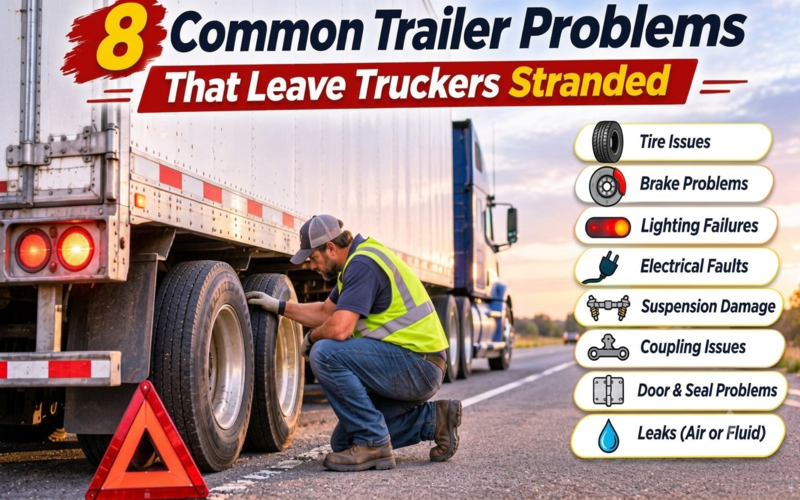
The most common semi trailer problems are tire and wheel-end failures, brake and air leaks, lighting and electrical faults, landing gear problems, suspension issues, damaged doors and latches, coupling problems at the kingpin or fifth wheel, and refrigeration unit issues on reefers. Many trailer repairs, including tires, air leaks, lights, wiring, brakes and landing gear, can be done on-site by a mobile trailer repair tech.
1. Tire Blowouts and Wheel-End Failures
Trailer tires often get less attention than steer tires, which is part of why they fail. Underinflation, overloading, heat and road debris all play a role.
Wheel-end problems also matter. A leaking hub seal or failing bearing can overheat, damage the wheel and, in the worst case, lead to a wheel separation.
Warning signs: low pressure, uneven wear, oil on the inside of the wheel, a hot hub or smoke from a wheel end.
On-site fix: tire replacement, hub seal replacement and many wheel-end repairs.
2. Air Leaks and Brake Problems
Trailer brakes rely on air from the tractor. Leaks at gladhands, damaged lines, failing brake chambers or worn slack adjusters can cause weak braking or brakes that won’t release.
Warning signs: hissing at the trailer, pressure drop, dragging brakes or a hot smell from a wheel.
On-site fix: gladhand seals, air lines, brake chambers, slack adjusters and valves.
3. Lights and Electrical Problems
Lighting problems are one of the most common inspection violations. Corroded connectors, damaged wiring and broken lamps are typical causes.
Warning signs: lights that flicker or don’t work, a trailer ABS warning lamp, or blown fuses.
On-site fix: lamp replacement, 7-way connector and pigtail repair, wiring repairs and ABS troubleshooting.
4. Landing Gear That Won’t Crank
Stuck or damaged landing gear can keep you from dropping or hooking a trailer. Bent legs, worn gears, lack of lubrication and damage from hitting the ground too hard are common causes.
On-site fix: lubrication, gearbox repair and, in many cases, landing gear replacement.
5. Suspension Problems
Air-ride trailers can develop leaking air bags or failing height control valves. Spring-ride trailers can have cracked or broken leaf springs.
Warning signs: a trailer that sits low on one side, rough ride, or visible damage.
On-site fix: air bags, height control valves and many spring repairs. Major suspension damage may need a shop.
6. Damaged Doors, Latches and Hinges
Swing doors and roll-up doors take daily abuse. Broken latches, bent hinges and damaged seals can affect security and keep cargo from staying dry or cold.
On-site fix: latch, hinge, seal and many door hardware repairs.
7. Kingpin and Coupling Issues
Problems at the connection between tractor and trailer are serious safety issues. A damaged kingpin, worn upper coupler or bad fifth wheel lock can cause dangerous separation.
Warning signs: clunking when starting or stopping, excessive movement, or trouble locking.
What to do: don’t pull the trailer until it’s inspected. Some repairs can be done on-site; major upper coupler damage usually needs a shop.
8. Reefer Unit Problems
Refrigerated trailers depend on their reefer unit to protect the load. A failed unit, low fuel or electrical issues can put perishable freight at risk.
What to do: check fuel, alarms and temperature settings, and call for help immediately. Tell the dispatcher it’s a reefer, since some refrigeration unit repairs need a specialist.
Trailer Problems at a Glance
| Problem | Usually fixed on-site? |
|---|---|
| Tires and many wheel-end issues | Yes |
| Air leaks and brake components | Yes |
| Lights, wiring and ABS | Yes |
| Landing gear | Usually |
| Air bags and height control valves | Usually |
| Doors, latches and seals | Usually |
| Kingpin and major coupler damage | Sometimes; often a shop |
| Reefer unit failure | Depends on the problem |
How to Prevent Trailer Breakdowns
- Walk around the trailer at every pre-trip and post-trip.
- Check tire pressure with a gauge, not by eye.
- Feel hubs after a run for unusual heat.
- Test every light, including markers and ABS.
- Listen for air leaks at the gladhands and brake chambers.
- Lubricate landing gear and inspect it regularly.
- Schedule trailer PM, not just tractor PM.
When the Trailer Can’t Be Fixed Roadside
If the trailer needs shop work, our trailer towing and semi truck towing teams can move it safely.
Mobile Trailer Repair Across Texas
Alpha Roadside Service provides on-site trailer repair for dry vans, reefers, flatbeds and utility trailers, plus semi truck repair, mobile diesel mechanic service and roadside assistance.
We serve Dallas, Richardson, Mesquite and drivers across Texas. Call +1 (855) 457-1170 or request a service.
Frequently Asked Questions
What are the most common semi trailer problems?
Tire and wheel-end failures, air leaks, brake problems, lighting faults, landing gear issues, suspension problems and damaged doors.
Can trailer repairs be done on-site?
Many can, including tires, air leaks, brakes, lights, wiring, landing gear and door hardware.
Why are my trailer lights not working?
Usually corroded connectors, damaged wiring, blown fuses or broken lamps.
What causes trailer brakes to drag?
Often a failing brake chamber, stuck valve, out-of-adjustment brakes or low air pressure.
Do you repair reefer trailers?
Yes, we repair reefer trailers. Some refrigeration unit problems may need a specialist, so tell dispatch it’s a reefer when you call.