A diesel engine can run for years without a single major failure, right up until it doesn’t. The difference between a truck that keeps rolling and one that ends up stranded on the shoulder usually isn’t luck. It’s whether a routine inspection catches small, developing problems or they go ignored until they turn into a breakdown.
A thorough diesel mechanic truck inspection isn’t just a box to check for compliance; it’s the single most effective way to catch expensive problems while they’re still cheap to fix.
This guide explains why inspections matter, what a full inspection covers from the engine to the brakes and tires, and the issues a good technician catches before they cost you a delivery window.
Top Reasons to Get a Diesel Engine Inspection
A diesel engine inspection matters because it catches developing problems, worn brakes, low compression, fuel system contamination, weak batteries, and tire wear, while they’re still inexpensive to fix, rather than after they cause a roadside breakdown.
A full commercial truck inspection typically checks the engine, fuel and cooling systems, brakes, tires and wheels, electrical system, suspension and steering, and exhaust/emissions systems, and should be done on a regular schedule, not just when something already feels wrong.
Reason 1. It Catches Problems Before They Become Breakdowns
The entire value of an inspection is timing. A slightly worn brake pad found during inspection is a routine repair. The same pad, ignored for another few thousand miles, can mean reduced stopping power at the worst possible moment. Most roadside breakdowns didn’t start as sudden failures — they started as small, detectable issues that simply weren’t caught in time.
Reason 2. It Protects You From Costly Roadside Repairs
A repair done in a controlled inspection setting is almost always cheaper than the same repair done as an emergency roadside fix, and that’s before factoring in the cost of a missed delivery, a stranded load, or downtime that keeps your truck off the road entirely. Preventive inspection is consistently the more affordable path, even though it can feel like an unnecessary expense in the moment.
Reason 3. It Keeps You Compliant and Road-Ready
Federal regulations require annual inspections for commercial vehicles, and for good reason — brake, tire, and lighting issues are among the top causes of roadside out-of-service violations. A thorough inspection keeps your paperwork current and, more importantly, keeps your truck actually safe to operate rather than just technically compliant.
Reason 4. It Extends the Life of Your Engine and Major Components
Diesel engines are built to last hundreds of thousands of miles — but only with consistent attention. Catching a coolant leak before it causes overheating, or a fuel contamination issue before it damages injectors, protects components that are expensive to replace and difficult to repair roadside.
Reason 5. It Gives You an Honest Picture of Your Truck's Condition
Whether you’re an owner-operator planning your next long haul or a fleet manager scheduling maintenance across multiple trucks, a full inspection gives you a clear, documented picture of exactly what condition your vehicle is in — so decisions about repairs, scheduling, and budget are based on facts, not guesswork.
What a Full Diesel Truck Inspection Actually Covers
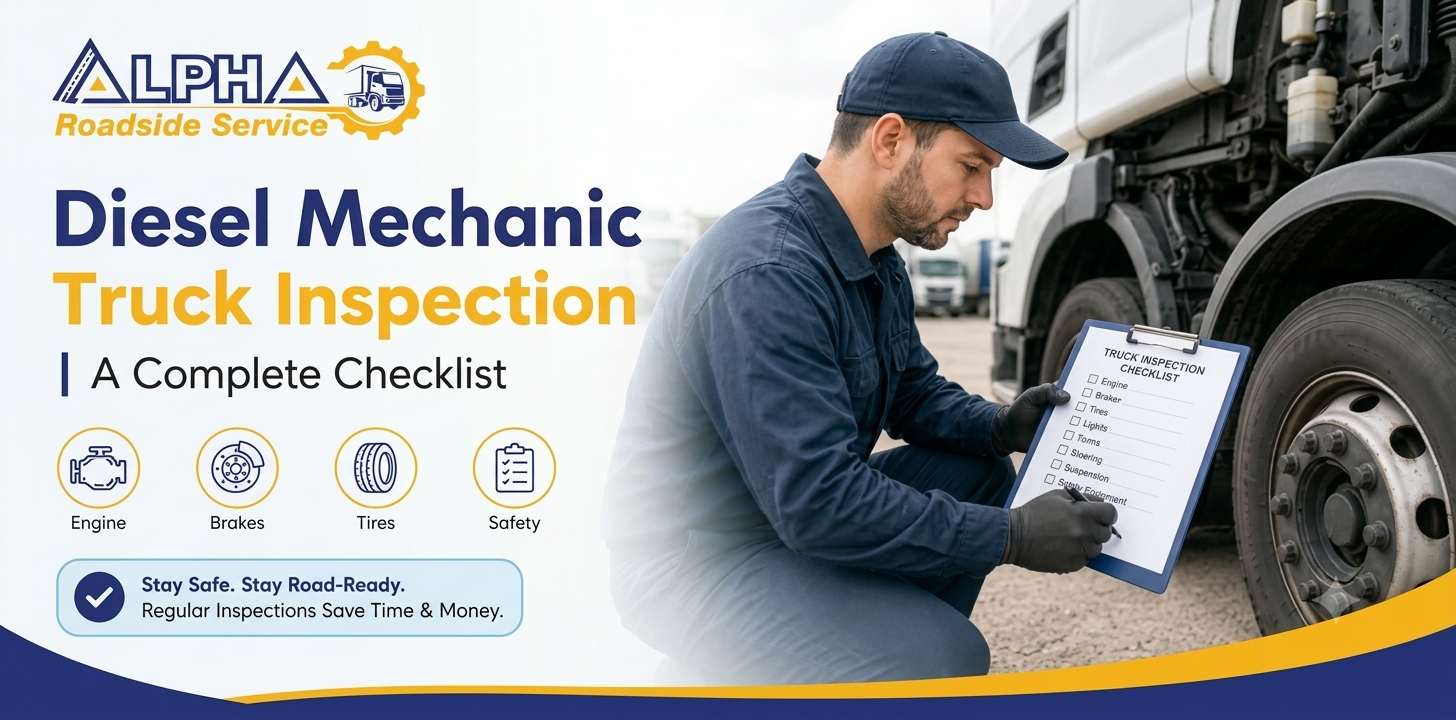
A proper commercial truck inspection isn’t a quick glance under the hood, it’s a systematic check across every major system that keeps a truck safe and reliable.
Engine
Technicians check for oil leaks, unusual noises, compression issues, and signs of wear on internal components. A full ECM scan pulls any stored fault codes that might not yet be showing up as a noticeable symptom.
Fuel System
Technicians check for oil leaks, unusual noises, compression issues, and signs of wear on internal components. A full ECM scan pulls any stored fault codes that might not yet be showing up as a noticeable symptom.
Cooling System
Technicians check for oil leaks, unusual noises, compression issues, and signs of wear on internal components. A full ECM scan pulls any stored fault codes that might not yet be showing up as a noticeable symptom.
Brakes
Technicians check for oil leaks, unusual noises, compression issues, and signs of wear on internal components. A full ECM scan pulls any stored fault codes that might not yet be showing up as a noticeable symptom.
Tires and Wheels
Tread depth, tire pressure, sidewall condition, and wheel bearing play are all checked. Uneven wear patterns often point to a deeper alignment or suspension issue that’s worth catching before it damages a new set of tires.
Electrical System
Batteries, terminals, alternator output, and wiring are tested, since electrical faults are now one of the leading causes of commercial truck breakdowns — and many start as a barely noticeable voltage drop long before a truck fails to start.
Suspension and Steering
Shocks, tie rods, ball joints, and overall alignment are inspected for wear or play, both for ride stability and to catch anything that could accelerate tire wear.
Exhaust and Emissions
DPF, EGR, and SCR systems are checked for proper function, since a failing emissions component can trigger a derate in engine power or an outright failed inspection.
Common Problems Found During Inspection — And Their Solutions
Here’s a quick reference for the kinds of issues technicians most often catch during a full inspection, and what typically resolves each one. This is easy to copy into your own maintenance log or checklist:
| System Checked | Common Problem Found | Typical Solution |
|---|---|---|
| Engine | Low compression, oil in coolant, worn injectors | Compression test, injector cleaning/replacement, head gasket repair |
| Fuel System | Clogged fuel filter, water contamination, weak fuel pressure | Filter replacement, fuel system flush, pump inspection |
| Cooling System | Low coolant, radiator clogging, failing thermostat | Coolant top-off/flush, radiator cleaning, thermostat replacement |
| Brakes | Worn pads/shoes, air leaks, slack adjuster out of spec | Pad/shoe replacement, air line repair, adjustment to spec |
| Tires & Wheels | Uneven tread wear, underinflation, wheel bearing play | Rotation/alignment, inflation correction, bearing repack or replacement |
| Electrical System | Weak battery, corroded terminals, alternator undercharging | Battery/terminal service, alternator testing and repair |
| Suspension & Steering | Worn shocks, loose tie rods, misalignment | Component replacement, full alignment |
| Exhaust & Emissions | Clogged DPF, EGR carbon buildup, sensor faults | DPF cleaning/regeneration, EGR service, sensor replacement |
Common Problems Found During Inspection — And Their Solutions
Here’s a quick reference for the kinds of issues technicians most often catch during a full inspection, and what typically resolves each one. This is easy to copy into your own maintenance log or checklist:
| System Checked | Common Problem Found | Typical Solution |
|---|---|---|
| Engine | Low compression, oil in coolant, worn injectors | Compression test, injector cleaning/replacement, head gasket repair |
| Fuel System | Clogged fuel filter, water contamination, weak fuel pressure | Filter replacement, fuel system flush, pump inspection |
| Cooling System | Low coolant, radiator clogging, failing thermostat | Coolant top-off/flush, radiator cleaning, thermostat replacement |
| Brakes | Worn pads/shoes, air leaks, slack adjuster out of spec | Pad/shoe replacement, air line repair, adjustment to spec |
| Tires & Wheels | Uneven tread wear, underinflation, wheel bearing play | Rotation/alignment, inflation correction, bearing repack or replacement |
| Electrical System | Weak battery, corroded terminals, alternator undercharging | Battery/terminal service, alternator testing and repair |
| Suspension & Steering | Worn shocks, loose tie rods, misalignment | Component replacement, full alignment |
| Exhaust & Emissions | Clogged DPF, EGR carbon buildup, sensor faults | DPF cleaning/regeneration, EGR service, sensor replacement |